


Monster House
4.6459.00 Reviews
App Specs
- Version
- 1.2.7
- Updated On
- License
- Free
- Downloads
- 1,000,000+
- Developer
- AlohaFactory
- Categories
- Arcade
- Platform
- Android
Screenshots
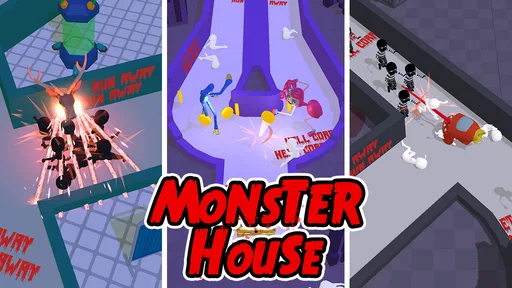
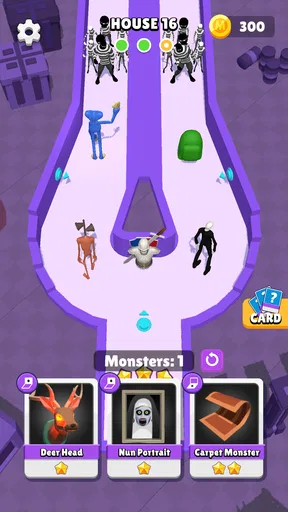
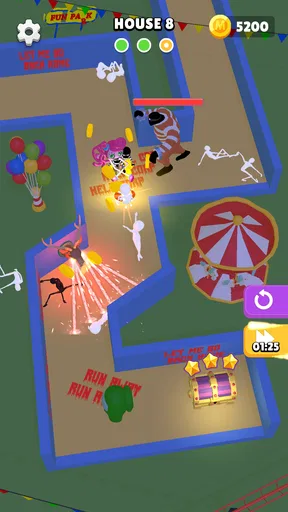
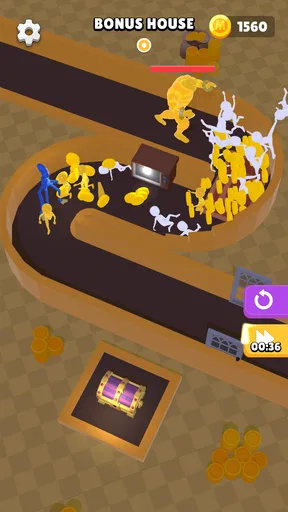
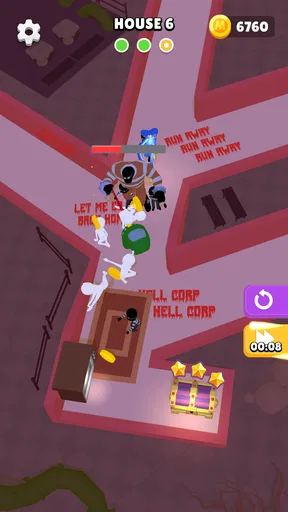
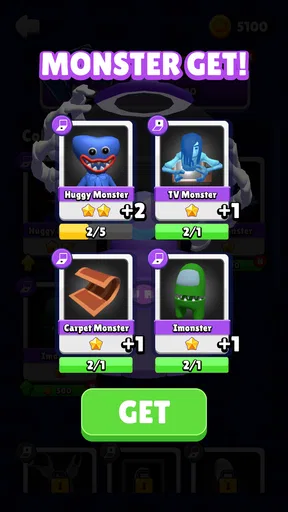
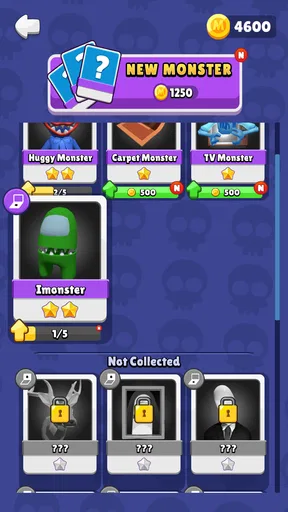
 Analysis by AppCompare
I went into Monster House expecting a quick arcade distraction, and that is exactly where it makes the most sense. This free game from AlohaFactory puts the focus on growing monsters, building momentum, and making short bursts of progress rather than asking me to settle into a long story or complicated strategy system. It is easy to understand within moments, but there is enough room for small decisions to make each session feel more involved than a simple tap-and-leave toy.
That straightforward approach is also the reason I would recommend it selectively. If you enjoy checking in often, improving a collection, and watching creatures become stronger over time, this is an appealing fit. If you want a deep role-playing game, a carefully written campaign, or precise competitive controls, the experience may feel too light. My overall impression is that Monster House works best as a casual arcade game for spare minutes, especially when I want visible progress without learning a large rulebook.
How Monster House feels in its current form
The game’s store summary, “GROW POWERFUL MONSTERS!”, describes its central appeal accurately without explaining why the loop can be satisfying. The pleasure comes from turning modest progress into a stronger monster roster. I found myself thinking less about a single dramatic victory and more about the next useful improvement: what to develop, when to spend resources, and whether a short session was better used for immediate progress or longer-term growth.
That makes it different from many arcade games that are built almost entirely around reflexes. Monster House still has the quick accessibility I expect from the category, but its motivation comes from development as much as action. I can play for a few minutes, leave, and return with a clear sense that I am continuing something rather than simply restarting another identical round.
The “Monster House” identity also gives the game a friendlier tone than a typical score-chasing arcade title. The monsters are the reason to keep returning, and the house concept makes the progression feel like a place I am gradually improving. I would not describe it as a demanding simulation, but that lighter presentation helps the game stay approachable for players who might find more elaborate management games tiring.
The first sessions are simple, but not empty
My first useful tip is to avoid treating every available improvement as equally urgent. In a game built around growing monsters, it is tempting to spend whatever becomes available immediately. I found the experience more comfortable when I paused long enough to consider which upgrade would make the next few sessions smoother. Even without a complex planning layer, that small habit gives the loop more shape and prevents progress from feeling automatic.
This is also where Monster House benefits from being an arcade game rather than a large adventure. There is little pressure to memorize a world, follow a long chain of objectives, or understand a complicated cast. I can open it when I have a short break and still feel that the session had a purpose. That makes it suitable for commuting, waiting rooms, or the few minutes before bed, provided I am comfortable with a game that emphasizes gradual growth over a final conclusion.
Worth Reading Before You Choose

EA SPORTS FC Mobile 26 Is a Bigger Football Game, but It Takes Time

Flipboard Shows What News Apps Must Do Beyond the Feed

Switching to Android Auto Means Rethinking Your Driving Routine

Google Calendar Makes a Crowded Week Easier to Manage

Ludo King Makes the Most of the Minutes Between Plans

Baby Panda World Brings Quick Play to Modern Phones, but Its Game Library Feels Busy
Parents and younger players may appreciate the accessible presentation as well. The content rating is Everyone, and the basic idea is easy to explain: look after monsters and make them more powerful. I would still suggest that adults check the purchase settings on a shared device, because a child-friendly age rating does not make optional spending irrelevant.
What the version and release history tell me
Monster House was released on June 8, 2022, and its current version is 1.2.7. Those details matter because they place the game in a more established stage than a brand-new experiment. I approached it as a title with time to settle into its basic identity, not as an unfinished launch build that might change completely from one week to the next.
The version number alone does not tell me that every weakness has been solved, and I would not use it as proof of a particular feature or improvement. What it does suggest is a product that has moved beyond its initial release and now has a defined shape. Existing players can reasonably judge the present loop on its own terms instead of installing only to see whether the concept has survived its first update cycle.
That is important for newcomers. I did not feel that I needed to understand the game’s entire history before enjoying it. The current build is the version that matters for a new player, while the release date provides useful context: this is not being presented as a temporary novelty, but as an arcade title that has remained available after its debut.
On Android, the minimum operating-system requirement is Android 8.0. That makes the game accessible to people using older compatible devices, although the actual comfort of play will still depend on the phone or tablet. I would keep expectations sensible on aging hardware: a lower requirement helps with compatibility, but it does not guarantee identical smoothness on every device.
Why the progression loop kept me returning
The strongest part of my experience was the sense of a compact routine. I could open the game, check where my monsters stood, make a growth decision, and stop without feeling that I had abandoned a major objective. That is a valuable quality in a mobile arcade game. Many alternatives demand either constant reflexes or a long uninterrupted session; Monster House makes room for a middle ground.
A second, less obvious strength is that the growth theme gives short sessions a memory. After closing the game, I could remember which monster or improvement I had been working toward. That sounds minor, but it is what separates a progression-based arcade game from an endless stream of disconnected attempts. The app gives me a reason to return that is more personal than simply beating my previous score.
I also found that the game works better when I use it as a small daily habit rather than trying to force a long marathon. The loop is naturally suited to checking progress, making a few choices, and leaving. Playing for too long can expose the repetition more quickly, while shorter visits preserve the feeling that each return has something useful to offer.
How it compares with familiar arcade alternatives
Compared with a traditional endless runner, Monster House is less dependent on perfect timing and more interested in accumulation. An endless runner is the better choice when I want immediate tension, a clear high-score challenge, or a game that tests my reactions from the first second. Monster House is more comfortable when I want the session to contribute to a continuing collection of progress.
It also differs from a puzzle arcade game. Puzzle titles usually reward careful solving inside each individual round, while this game’s satisfaction comes from the broader arc of making monsters stronger. If I want a self-contained problem with a definite answer, I would choose a puzzle alternative. If I want to feel that today’s brief session improves tomorrow’s starting point, Monster House has the stronger appeal.
Against a full monster-collecting role-playing game, the trade-off is even clearer. Monster House is easier to pick up and demands less time, but it does not offer the same kind of world-building, narrative investment, or elaborate team planning that a larger RPG can provide. I would choose this game for convenience and light progression, not as a replacement for a substantial adventure.
There is also a difference from idle games. Both can involve returning to see growth, but Monster House feels more like an arcade experience because I am still engaging with the act of developing monsters rather than merely watching numbers rise. Players who want almost completely passive progress may prefer an idle alternative; players who want at least some involvement will likely find this loop more rewarding.
Small decisions that improve the experience
One practical approach is to decide what kind of session I am having before I start. When I only have a minute or two, I focus on collecting progress and making one clear improvement. When I have more time, I look at the wider development picture and avoid spending resources simply because they are available. This keeps the game from becoming a sequence of unconscious taps.
Another useful habit is to judge progress by consistency rather than by one unusually good session. The game’s appeal is cumulative, so a player who returns regularly may get more from it than someone who plays intensely once and then stops. That is not a demand to create a strict schedule; it is simply a reminder that the design rewards continuity more than a single burst of attention.
I would also recommend treating purchases cautiously. Monster House is free to download, with in-app purchases priced at $2.99 per item. I did not see a reason to assume that spending is required before trying the core loop. My advice is to play long enough to decide whether the monster-growth routine genuinely fits your habits, then consider purchases only if they solve a specific annoyance or support a feature you already value. Buying first would make it harder to tell whether the game itself is holding your interest.
For families, the most sensible workflow is to set expectations before handing over the device. The Everyone rating makes the content approachable, but the presence of optional purchases means the payment side should be handled deliberately. That is a practical distinction many casual reviews skip: suitable content and suitable spending controls are separate questions.
Where the current experience can feel limited
The same simplicity that makes Monster House welcoming can eventually make it feel repetitive. If I am looking for constant novelty, dramatic surprises, or a large number of systems to master, the core growth loop may not provide enough variety for extended sessions. The game is strongest when I accept its compact scope instead of expecting it to behave like a full-scale adventure.
There is also a motivational trade-off. Growing monsters is a clear objective, but players who need a strong narrative reason to continue may find the routine less compelling. The app gives me a reason to improve, not necessarily a rich emotional story about why the improvement matters. That is perfectly reasonable for an arcade title, but it should shape expectations before installation.
Monetization can create another point of friction for cautious players. A free entry point is helpful, yet optional item purchases can make some people wonder whether the most comfortable pace is tied to spending. I would not call the game a poor choice solely because purchases exist, but I would recommend a no-spend trial mindset. If the ordinary loop is not enjoyable without extra help, paying is unlikely to fix the underlying mismatch.
Players with very limited storage or older phones should also consider the practical side of installation and performance rather than relying only on the operating-system requirement. Compatibility is encouraging, but the best experience still depends on the device. I would test it on the intended phone before recommending it widely, especially if several demanding games are already installed.
Who should play, and who should skip it
I think Monster House is a good match for casual players who like cute monster themes, gradual development, and short sessions with a visible sense of progress. It is particularly suitable for someone who wants more continuity than a one-round arcade game but less commitment than a role-playing adventure. The free price makes it easy to test without turning the decision into a large purchase.
I would also recommend it to players who enjoy making small optimization choices. You do not need to be a spreadsheet-minded strategist, but you should get some satisfaction from deciding how to use progress rather than tapping through everything automatically. That small layer of ownership is what gave the game its staying power for me.
I would skip it if my priority were competitive mastery, a long campaign, or a large amount of content to explore in every session. I would also look elsewhere if I disliked repeatable progression loops or felt uncomfortable with any game that includes optional purchases. A reflex-focused arcade title, a puzzle game, or a deeper monster RPG would be a better choice depending on which of those needs matters most.
What existing players and newcomers should watch
For new players, the main thing to watch is whether the growth loop remains enjoyable after the initial curiosity fades. The first sessions can be carried by the novelty of meeting the game’s idea, but the long-term test is simpler: do I still enjoy returning to improve monsters when there is no dramatic story event pushing me forward? If the answer is yes, the game has probably found the right pace for me.
Existing users should pay attention to how future updates affect that balance between quick access and meaningful decisions. The current version gives the game a settled identity, but any later change would be most valuable if it added depth without making short sessions feel like chores. I would welcome improvements that give returning players more purposeful choices while preserving the approachable arcade rhythm.
I would not judge future changes by size alone. A large update is not automatically better if it buries the simple monster-growth loop under unnecessary complexity. For this particular game, the best evolution would be the kind that gives me more reasons to care about my monsters without requiring a completely different style of play.
My recommendation after playing
Monster House is an easygoing arcade game with a clear personality and a useful place on a mobile device. AlohaFactory has built its appeal around developing monsters rather than overwhelming me with systems, and that restraint is both its advantage and its boundary. I enjoyed it most in short visits, where each decision felt like a small step forward instead of a demand for a long commitment.
The game has already attracted over a million installs and holds a 4.6 average from around eighteen thousand ratings, which fits my impression that its accessible loop has broad appeal. Those figures are not a substitute for personal taste, though. The right question is not whether it can entertain everyone, but whether I enjoy returning to the same central promise: making my monsters more powerful through steady play.
My recommendation is to try it for free, keep spending optional, and judge it as a compact progression arcade game rather than a full monster RPG. For a quick daily distraction with a little more continuity than a standard score chase, it is worth installing. For players who need deep variety or a demanding challenge, the limitations are likely to appear sooner. In my experience, Monster House succeeds when I let it be small, friendly, and consistently rewarding instead of asking it to become something larger.
Pros
- Short
- accessible gameplay sessions for casual players.
- Creative monster-themed setting with a playful visual style.
- Simple controls make it easy to learn without a tutorial.
- Offers an entertaining change of pace from realistic games.
- Suitable for players who enjoy lighthearted supernatural themes.
Cons
- May feel repetitive after several rounds or extended play.
- Some content can seem limited compared with larger mobile games.
- Progress may be less rewarding for experienced players.
- The spooky theme may not appeal to everyone.
- Performance can vary on older phones or less powerful devices.
FAQs for Monster House
What is Monster House about?
Monster House is an action-adventure game inspired by the animated movie of the same name. Players explore a spooky house, solve environmental puzzles, avoid or defeat enemies, and progress through different rooms and challenges. Its main appeal is the combination of exploration, cartoon-style horror, platforming, and light combat, making it suitable for players who enjoy family-friendly spooky adventures.
Is Monster House suitable for children?
Monster House generally presents horror elements in a colorful and accessible way rather than using realistic violence or intense scares. However, the experience can still include creepy environments, monsters, chase sequences, and occasional suspense. Parents should consider a child’s sensitivity to frightening imagery and check the age rating, content description, and device-store information before allowing younger players to download it.
Can Monster House be played offline?
The ability to play Monster House without an internet connection may depend on the specific version and platform available on your device. Some releases allow the main gameplay to run offline after installation, while downloads, updates, advertisements, or additional services may require connectivity. It is best to review the store listing and test the game after installation before relying on it during travel.
Is Monster House free to download and does it include purchases?
The price and monetization model for Monster House can vary according to the version, operating system, region, and publisher. Some editions may be paid downloads, while others may be offered free with advertisements or optional purchases. Before installing, check the official Google Play or App Store page for the current price, in-app purchase details, advertising information, and any required account permissions.
What devices are compatible with Monster House?
Compatibility depends on which Monster House release you choose, since different editions may have different technical requirements. Check the official store page for the minimum Android or iOS version, supported device models, storage requirements, and controller support. Older phones and tablets may experience slower loading, reduced graphics quality, or installation problems even when the application appears in search results.


